.svg)
Real-World Stablecoin Signals from Asia in 2026
March 3, 2026

Stablecoins in Asia are treated as operational infrastructure, driving crypto adoption across institutional and commercial channels.
At Consensus Hong Kong 2026, discussions centered on licensing pathways, exchange liquidity, reserve verification, and cross-border settlement mechanics. As Hong Kong positions itself among regional tokenization hubs, participants evaluated how tokens operate within regulatory systems, how collateral is documented, and how liquidity behaves across trading venues.
The tone was practical and commercially focused. Stablecoins are assessed on structure, audit transparency, and integration into real financial flows.
Several important signals emerged.
Regulation as a Foundation for Adoption
In Hong Kong, regulatory clarity was viewed as a prerequisite for institutional participation.
Participants asked where a stablecoin can be traded, how it aligns with local supervisory standards under frameworks like the Payment Services Act, and how issuance is structured. Licensing pathways for stablecoin issuance service and compliance alignment with electronic payment instruments regulations were central to the discussion.
Business Development Lead Eigirdas Zilinskas observed that participants approached regulation in a solution-oriented way, focusing on how to operate within established frameworks to enable institutional adoption.
When USDKG's issuance model and Ministry of Finance oversight were explained, engagement increased. Sovereign-aligned governance and documented issuance procedures provided clarity for institutions assessing operational risk.
Regulatory alignment was consistently linked to market credibility.
Exchange Liquidity Drives Real Usage
Liquidity and exchange access remain decisive factors in stablecoin adoption.
Binance, OSL, HashKey, Curve, and Uniswap were frequently referenced during discussions about routing and trading depth. These virtual asset exchanges and platforms hosting the largest stablecoins continue to serve as the primary rail for stablecoin activity in the region. Exchange infrastructure, including liquidity pool provision mechanisms, enables both institutional settlement and market-making operations.

At the USDKG booth, conversations often began with exchange compatibility before moving into collateral structure. Participants evaluated how a gold-backed, USD-pegged token integrates into existing order books and whether liquidity depth supports cross-border settlement.
Reserve quality attracts attention. Liquidity access enables usage.
Gold Backing and Audit Discipline
The gold-backed, USD-pegged structure generated sustained engagement.
Operational Lead Maisa Bitencourt noted that many attendees responded positively to the design and described the combination as differentiated within the stablecoin landscape.
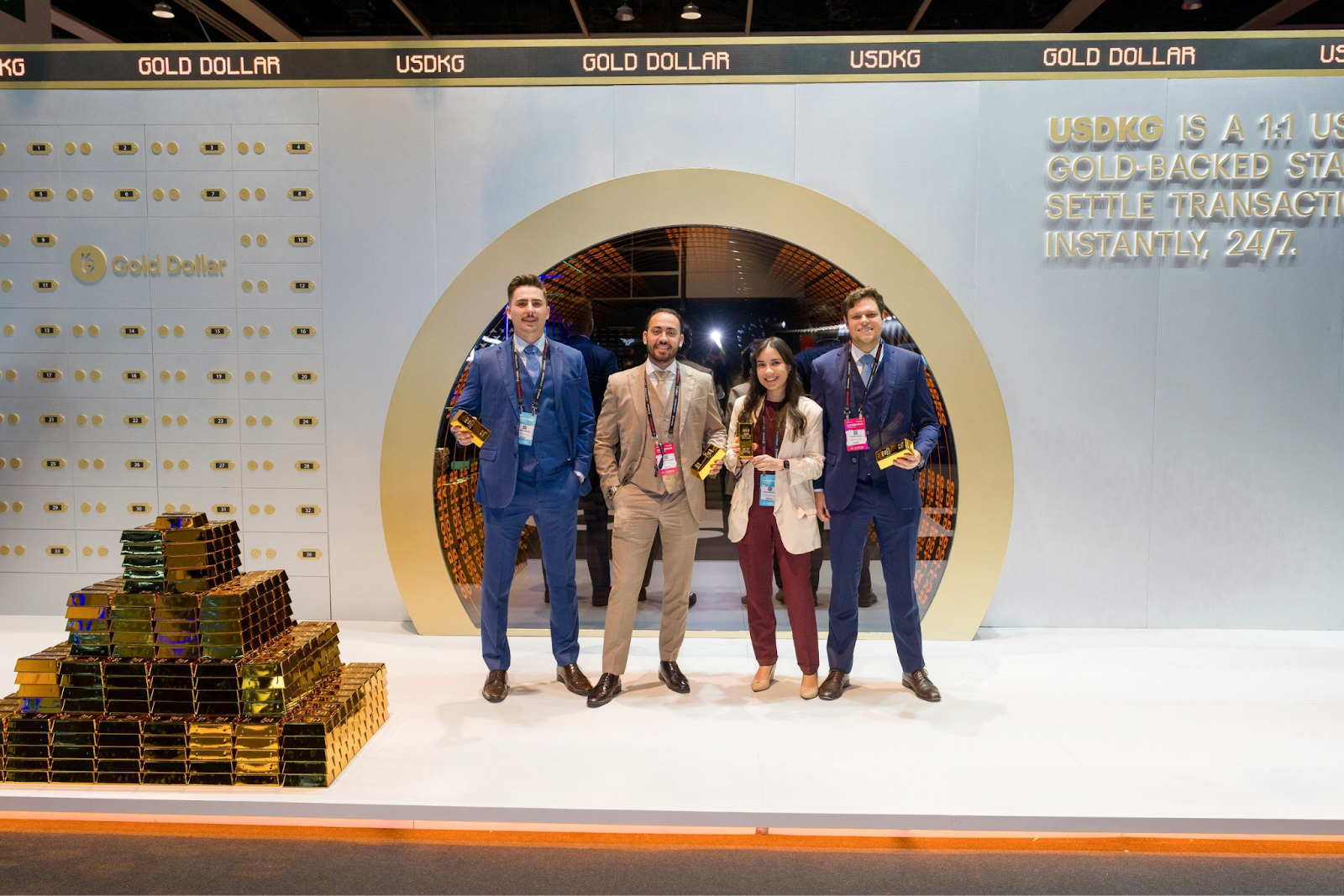
Discussions moved directly into audit verification, custody standards, and issuance discipline. Participants asked about vault storage, third-party reserve audits, and how collateralization is maintained during gold price fluctuations.
When independent audit procedures and structured issuance controls were outlined, responses were constructive and informed. Reserve transparency resonated strongly with institutional participants who prioritize asset verification.
Gold backing created a detailed conversation around collateral integrity and operational governance.
Cross-Border Settlement and Dollar Efficiency
Cross-border settlement featured prominently in institutional dialogue.
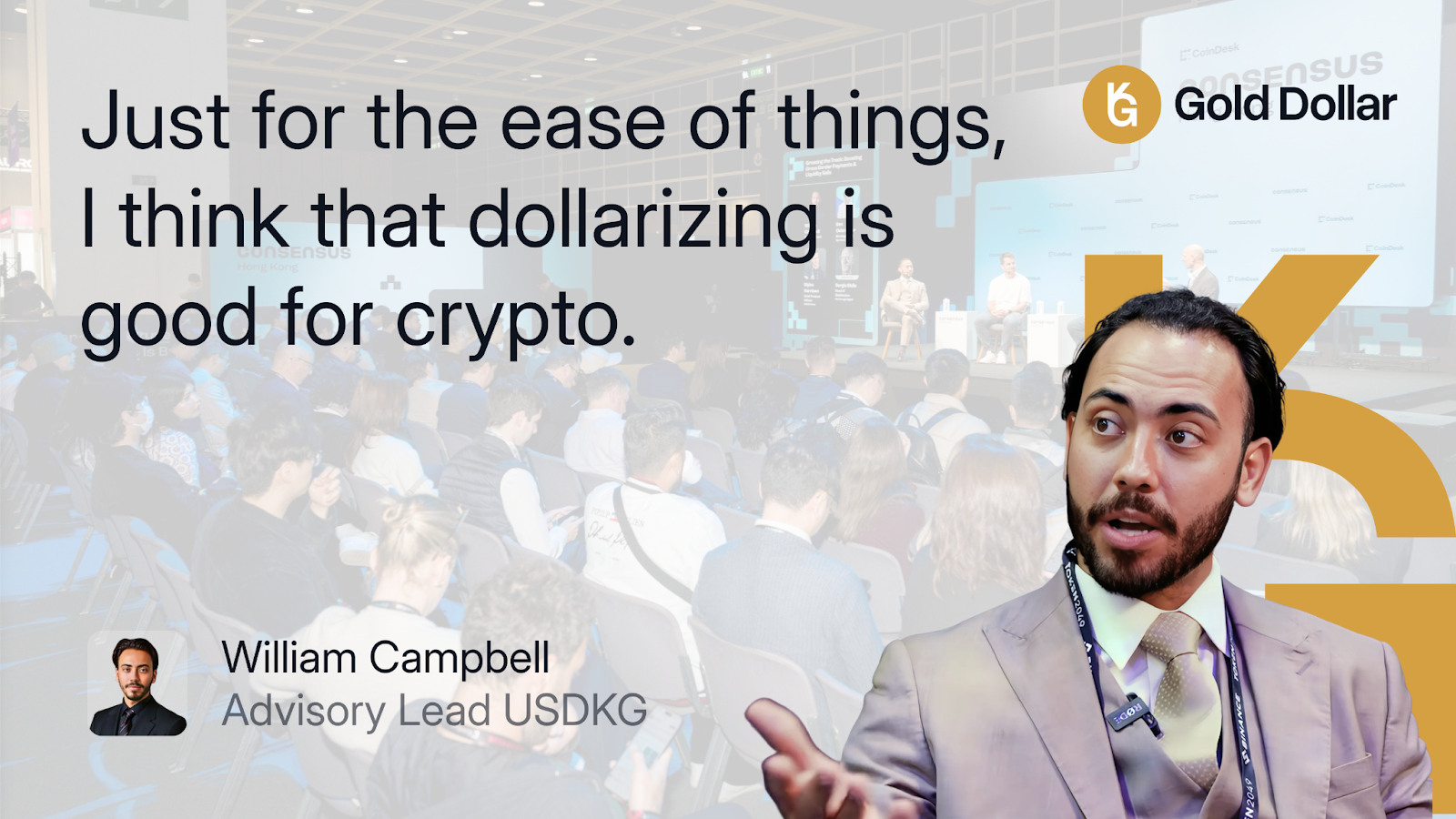
During a panel alongside representatives from Synthetix, AMINA Bank, and Anchorage Digital, William Campbell highlighted a practical dynamic: "Just for the ease of things, dollarising is good for crypto."


Dollar-denominated settlement aligns with global liquidity pools and simplifies routing across jurisdictions. Participants discussed stablecoins in the context of trade corridors, supply chain finance, capital flow management, and treasury operations. Beyond institutional applications, the potential for peer-to-peer transfers and retail digital payments was also acknowledged as emerging use cases.
Institutions also explored USDKG's multi-asset redeemability framework. The ability to convert between gold, fiat, and crypto within a structured process generated interest, particularly among asset holders seeking liquidity solutions for physical reserves.
The settlement use case was evaluated through the lens of predictability and reserve backing.
Institutional Risk Evaluation
The event attracted a strong institutional presence, including digital banks, infrastructure providers, and asset managers operating as major payment institution entities.


Conversations focused on governance segmentation, reserve documentation, and operational controls. Institutions examined how issuance decisions are approved, how compliance functions are structured, and how reserve audits are conducted with emphasis on customer asset protection standards.

Predictability was a recurring theme. Participants responded positively to clearly defined issuance procedures, audit transparency, and collateral verification standards.
Institutional allocators evaluated stablecoins through a risk management framework that prioritizes asset quality, jurisdictional clarity, and liquidity pathways.
What These Signals Indicate
The discussions in Hong Kong highlight three structural drivers shaping stablecoin adoption in Asia:
• Regulatory alignment
• Exchange integration
• Verifiable collateral
Stablecoins that combine transparent reserves, structured issuance, and seamless market access are positioned to support institutional use cases.
USDKG's structure as a USD-pegged stablecoin backed by physical gold, independently audited, and issued within a defined regulatory framework aligns with these criteria. The engagement at Consensus Hong Kong confirmed demand for assets that provide predictable dollar settlement supported by tangible collateral and documented governance.
Stablecoin adoption in the region is grounded in structure, verification, and operational clarity.
Structure defines credibility.
Related Articles
August 11, 2026
Stablecoins Are Reshaping Financial Infrastructure
Financial infrastructure rarely changes through a single technological breakthrough. It evolves through the gradual adoption of systems that improve the movement, settlement, and management of capital while integrating into existing financial processes.
July 14, 2026
The Stablecoin Market Is Entering Its Regulatory Era
Stablecoins are entering a new phase of development where regulatory clarity is becoming as important as liquidity and network effects. Around the world, jurisdictions are reshaping digital finance, making governance, transparency, and legal certainty increasingly central to long-term adoption.

June 30, 2026
Beyond Backing: What Tether’s aUSDT Closure Reveals About Commodity-Backed Digital Assets
The closure of Tether's aUSDT highlights a broader shift within the commodity-backed digital asset market. As adoption matures, utility, transparency, liquidity, and integration into financial infrastructure are becoming just as important as the assets held in reserve.