.svg)
Market Volatility, Gold and the Role of Stablecoins in Periods of Oil Supply Stress
March 10, 2026

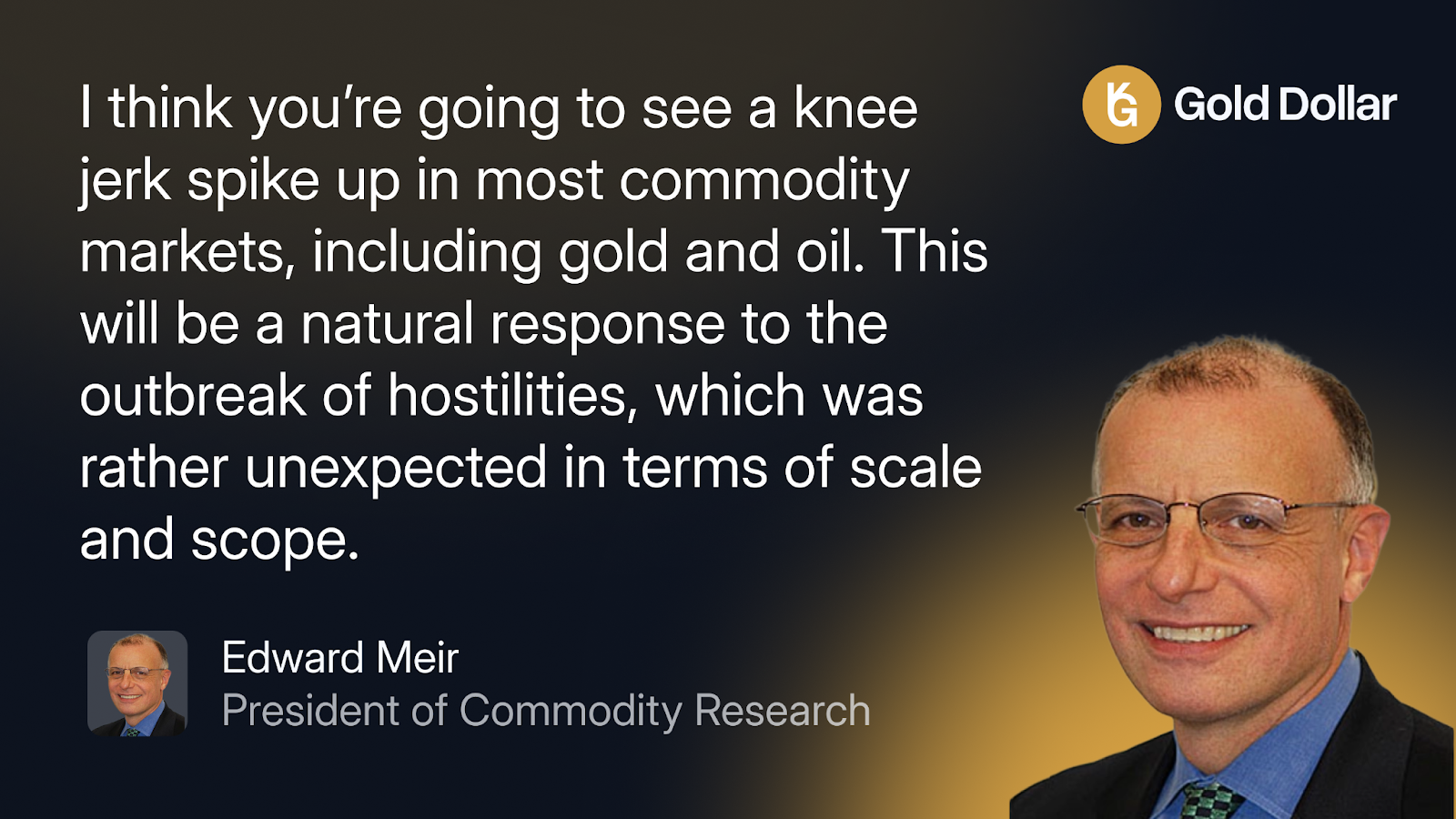
Energy market volatility has once again become a defining variable in global macroeconomic stability. Tensions affecting major oil-producing regions and critical shipping corridors have reinforced the sensitivity of global oil supply chains. When oil prices react to geopolitical stress, the transmission effects extend rapidly across inflation expectations, currency markets, sovereign debt yields, and cross-border trade flows.
For institutional allocators and treasury managers, the question is structural rather than political. How resilient are financial settlement systems and reserve backing models during periods of energy market tightening?
As global markets navigate renewed oil price pressure linked to instability in the Middle East, the relationship between gold reserves, inflation protection, and digital asset infrastructure becomes increasingly relevant.
Oil Price Shocks and the Inflation Transmission Mechanism
Oil remains a core input across transportation networks, industrial manufacturing, agriculture, and global logistics. A sustained oil price shock influences production costs, freight rates, and consumer price indices within weeks. Inflation expectations adjust accordingly, and central banks incorporate energy-driven price pressures into monetary policy decisions.
Higher energy prices frequently delay easing cycles and increase volatility in sovereign bond markets. Emerging market currencies can experience amplified pressure when import costs rise and capital flows reposition toward defensive allocations. The financial stress index often reflects these compounding pressures during periods of sustained energy market disruption.
For companies engaged in cross-border trade, this environment introduces dual exposure. Commodity cost volatility coincides with currency instability, placing additional emphasis on hedging strategies, liquidity management, and predictable payments infrastructure.
Energy volatility therefore directly impacts trade finance operations and institutional treasury planning.
Gold as a Reserve Asset During Geopolitical and Inflation Stress
Gold has historically functioned as a reserve asset during periods characterized by geopolitical uncertainty, elevated inflation expectations, and currency volatility. Unlike sovereign debt instruments, gold does not represent a liability of a government issuer. Its valuation is determined by global commodity markets rather than fiscal balance sheets.
Recent years have seen sustained central bank gold purchases, reflecting a broader reserve diversification trend across both developed and emerging economies. According to data from the World Gold Council, central banks have increased gold allocations as part of long-term macroeconomic risk management and portfolio diversification strategies.
During periods of oil supply disruption and inflation uncertainty, institutional capital frequently rotates toward gold as one of the primary safe haven assets. This allocation behavior reinforces the strategic role of tangible reserves within diversified portfolios.
In the context of digital finance, the quality and composition of reserve backing become central to evaluating stablecoin resilience.
Stablecoin Backing Models Under Macro Stress
The stablecoins market now exceeds $150 billion in capitalization and functions as a critical layer of digital asset infrastructure. Understanding the purpose of stablecoins is essential: they facilitate exchange liquidity, decentralized finance participation, and cross-border settlement across multiple jurisdictions.
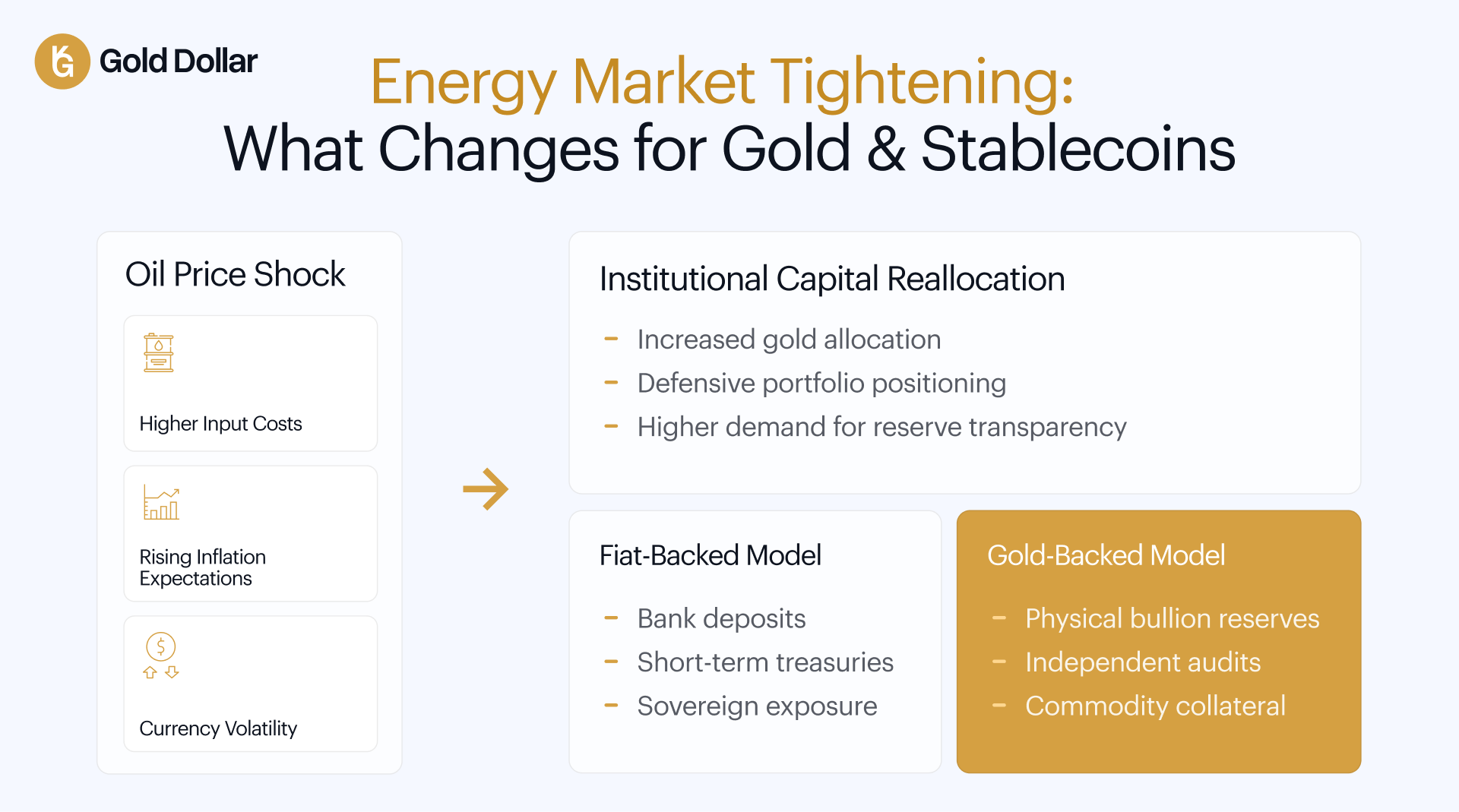
Energy market tightening increases scrutiny on stablecoin backing models. Different reserve structures introduce different forms of exposure.
A fiat-backed stablecoin typically holds cash deposits, short-term U.S. Treasuries, money market funds, and high-quality liquid assets within regulated banking institutions. This model integrates closely with sovereign debt markets and commercial banking systems.
A gold-backed cryptocurrency relies on physical bullion reserves held in secured vault storage. This commodity-backed stablecoin model anchors value to tangible gold reserves rather than to financial claims on sovereign issuers.
In periods of oil-driven inflation and currency volatility, institutions evaluate these backing models through a risk distribution lens. Fiat-backed structures maintain liquidity alignment with sovereign debt markets. Gold-backed structures introduce commodity exposure and diversification from sovereign credit dynamics.
The structural distinction becomes more relevant when macro conditions tighten.
Trade Finance Volatility and Cross-Border Settlement Risk
Energy price shocks disproportionately affect trade-dependent economies. When oil prices rise, import costs expand, trade balances adjust, and foreign exchange volatility increases. Hedging expenses can rise alongside widening currency spreads.
For exporters, importers, and multinational treasury teams, cross-border settlement predictability becomes a strategic priority. Stablecoin use cases have increasingly expanded into trade corridors as a mechanism for reducing settlement friction and improving transaction speed for international money transfers. Stablecoins infrastructure has been integrated alongside traditional correspondent banking systems to enhance efficiency.
In this context, the resilience of the underlying reserve asset becomes a decisive factor. Gold-backed digital assets introduce a settlement layer supported by physical gold reserves, while fiat-backed models remain linked to banking system liquidity and sovereign instruments.
Institutional adoption of stablecoins infrastructure is therefore closely tied to collateral transparency, reserve audit standards, and regulatory clarity.
Regulatory Frameworks and Institutional Confidence
During periods of macroeconomic stress, regulatory alignment and legal clarity contribute significantly to institutional confidence. Jurisdictions that have implemented structured regulatory frameworks for virtual assets provide defined licensing pathways, AML compliance requirements, and supervisory oversight mechanisms. Stablecoin development has accelerated in regions with clear regulatory guidance, including frameworks such as MiCA regulations in Europe.
Kyrgyzstan's Law on Virtual Assets establishes a formal regulatory framework governing issuance, custody, and compliance standards for digital assets. This includes licensing requirements for Virtual Asset Service Providers, automated compliance protocols, sanctions screening procedures, transaction monitoring systems, and defined supervisory oversight structures.
For institutional participants evaluating gold-backed stablecoins and cross-border settlement tools, regulatory clarity reduces operational uncertainty during volatile macro cycles.
Collateral Discipline and Gold-Backed Digital Assets
USDKG operates as a USD-pegged stablecoin backed by physical gold reserves, with issuance tied to verified collateral and independent audit procedures as outlined in its public documentation. This structure reflects a commodity-backed stablecoin model designed to combine dollar-denominated settlement with tangible reserve backing and secure digital asset custody.
In environments shaped by oil supply disruption, inflationary pressure, and currency volatility, collateral discipline becomes central to risk management. Reserve transparency, third-party audits, on-chain analytics, and documented issuance logic are structural components that institutions assess when evaluating stablecoin resilience.
Gold-backed digital assets replace sovereign debt exposure with commodity-backed reserves. Their stability depends on disciplined issuance and transparent custody practices.
Energy Volatility and Digital Asset Infrastructure
The intersection between energy markets, inflation expectations, and digital settlement systems highlights a broader structural shift. Financial infrastructure increasingly incorporates programmable digital assets and wallet technology that operate alongside traditional banking systems.
Periods of energy market tightening tend to reinforce three institutional priorities:
- Reserve tangibility
- Audit transparency
- Legal clarity
Gold-backed stablecoins sit at the convergence of these priorities. They combine blockchain-based transferability with commodity reserve backing and regulated issuance structures.
For cross-border operators navigating oil price volatility and foreign exchange instability, such structures expand available settlement options without replacing existing financial rails.
Conclusion: Reserve Quality as a Strategic Variable
Energy market volatility linked to geopolitical tension influences inflation expectations, sovereign bond markets, currency stability, and trade finance conditions. In such environments, the resilience of financial infrastructure becomes a strategic consideration.
Gold has historically attracted institutional allocation during periods of oil-driven inflation and geopolitical uncertainty. Stablecoins infrastructure continues to mature within this macro context.
For institutional decision-makers evaluating stablecoin backing models, core questions remain consistent:
What asset supports the reserve?
How transparent are the audits?
Which regulatory framework governs issuance?
How resilient is the settlement infrastructure under macro stress?
The durability of a stablecoin during periods of energy market tightening depends on the structure of its collateral and the clarity of its regulatory alignment.
USDKG's gold-backed reserve model operates within this structural framework, combining commodity collateral, audit transparency, and regulated digital issuance for cross-border settlement use cases.
Related Articles
August 11, 2026
Stablecoins Are Reshaping Financial Infrastructure
Financial infrastructure rarely changes through a single technological breakthrough. It evolves through the gradual adoption of systems that improve the movement, settlement, and management of capital while integrating into existing financial processes.

June 30, 2026
Beyond Backing: What Tether’s aUSDT Closure Reveals About Commodity-Backed Digital Assets
The closure of Tether's aUSDT highlights a broader shift within the commodity-backed digital asset market. As adoption matures, utility, transparency, liquidity, and integration into financial infrastructure are becoming just as important as the assets held in reserve.
June 23, 2026
The Rise of Commodity-Backed Digital Assets in Global Finance
Commodity-backed digital assets are bringing tangible value into blockchain-based financial systems. As institutions place greater emphasis on collateral quality, transparency, and reserve integrity, assets such as gold, energy resources, and other commodities are becoming increasingly relevant within digital finance.