.svg)
Top Cross-Border Payment Solutions to Streamline Global Transfers
March 31, 2026
Cross border payments are a core component of global trade, yet the infrastructure behind them is undergoing a structural shift.
As businesses expand internationally, the demand for faster cross-border transactions, transparent fees, and reliable settlement has increased. Payment processing systems are no longer only operational tools. They influence liquidity management, treasury management, working capital optimization, and financial planning across regions.
A new generation of global payments solutions is emerging to address these needs. These solutions include traditional payment networks, fintech payment platforms, blockchain payment processing systems, stablecoins, and blockchain-based settlement systems.
The Expanding Role of Cross-Border Transactions Infrastructure
Cross border payments have traditionally relied on correspondent banking networks and global banking systems such as SWIFT, enabling wire transfers and international money transfers between financial institutions. These payment rails continue to support large-scale transactions and institutional capital flows, though they can be subject to settlement delays.
At the same time, expectations have evolved. Businesses now require real-time payment visibility, payment status tracking, predictable transaction costs, and faster settlement across jurisdictions. According to FXC Intelligence, these payment challenges have driven significant innovation in the financial services sector.
This has led to the development of additional layers of payment infrastructure that complement existing systems while improving efficiency in global payments and payment corridors.
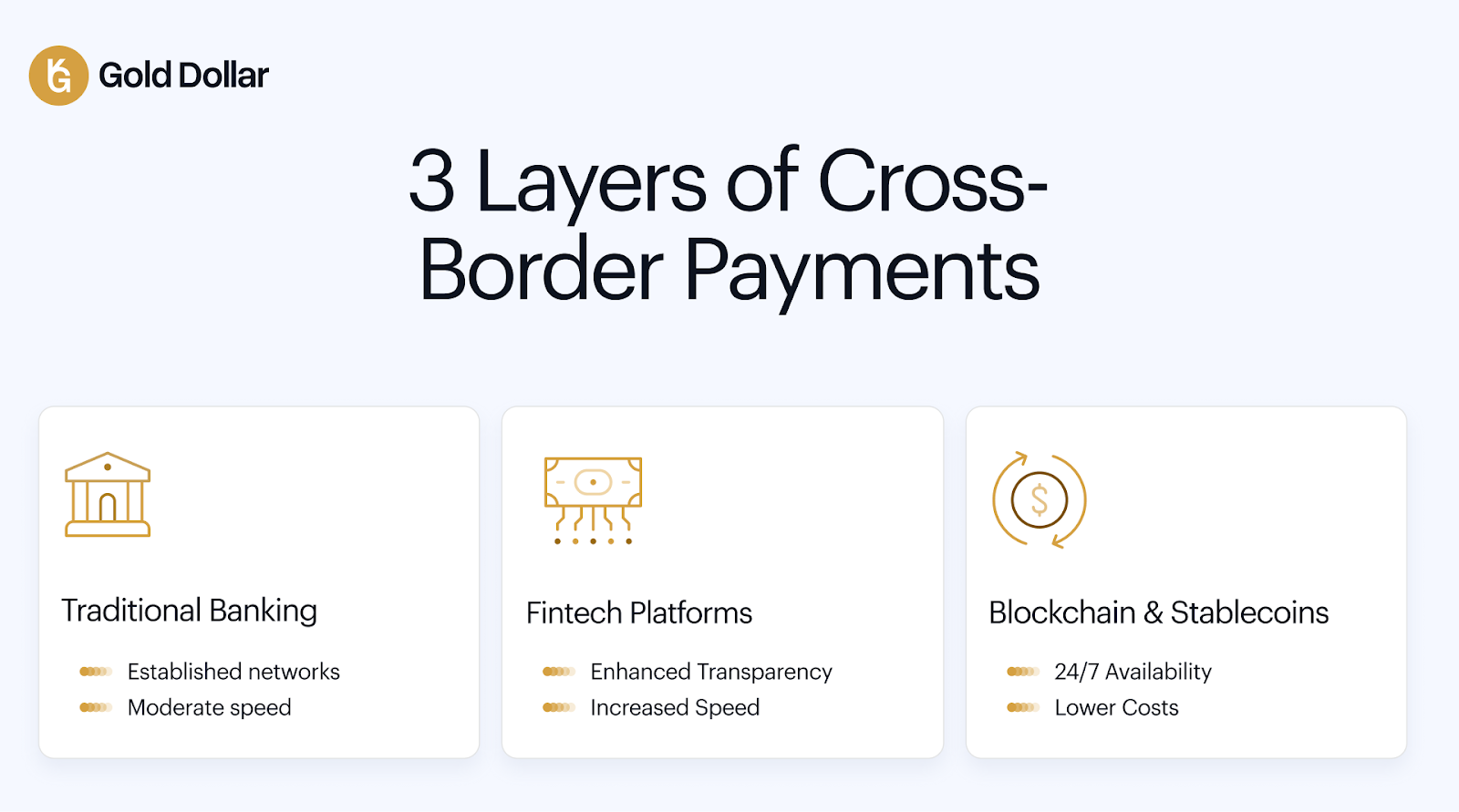
This evolution can be understood as a layered system, where traditional banking infrastructure, fintech platforms, and blockchain-based settlement increasingly operate in parallel rather than in isolation. Each layer contributes different capabilities to the overall payment stack, enhancing interoperability and shaping how value moves across borders today.
Fintech Platforms and Digital Payment Solutions
Fintech companies have introduced digital-first solutions for international payments. These payment providers and payment gateways focus on improving user experience, reducing friction, and increasing transparency in cross-border transactions through digital wallets, competitive exchange rates, and streamlined payment methods.
They are widely used for operational payments such as supplier payments, vendor payments, cross-border payroll payments, b2b payments, merchant payments, and international business transfers. By optimizing payment routing, offering efficient currency conversion, and providing clearer pricing structures with lower transaction costs and reduced fx spreads, fintech platforms have become an important part of the global payment ecosystem.
As adoption increases, these digital payment solutions continue to support businesses seeking faster and more efficient global payments with enhanced global reach.
Stablecoins and Blockchain-Based Global Payment Providers
Stablecoin payments are becoming an increasingly relevant solution for cross border payments.
A stablecoin is a digital asset designed to maintain a stable value, typically pegged to a fiat currency such as the US dollar. Stablecoin transfers enable instant payments and near-instant settlement on distributed ledger networks such as Ethereum and TRON, allowing value to move globally without relying on traditional banking hours or unfavorable exchange rates.
Blockchain payment processing offers continuous availability, transparent transaction records with built-in transaction monitoring, and reduced settlement time through blockchain-based payment rails. These characteristics make stablecoin payments particularly suitable for international transfers, remittances, and treasury operations.
As adoption grows, stablecoin payments are increasingly integrated into decentralized finance platforms and cross-border payment infrastructure, with digital asset custody solutions supporting secure storage and access.
Asset-Backed Stablecoin Payments and Value Stability
Within the stablecoin category, reserve design plays an important role in digital asset payments.
Asset-backed stablecoins are supported by tangible reserves such as commodities or physical assets. This structure introduces an additional layer of stability, particularly in emerging markets where currency volatility and fluctuating exchange rates can impact cross-border transactions.
USDKG is a USD-pegged stablecoin backed by physical gold reserves. It combines dollar-denominated settlement with collateral anchored in a globally recognized reserve asset.
This model supports cross border payments by providing both transactional efficiency and a stable store of value. For businesses operating in international trade, this can help reduce exposure to currency fluctuations while maintaining predictable settlement conditions.
At the same time, developments in regions such as Central Asia highlight how regulatory clarity and infrastructure development are progressing alongside these technologies.
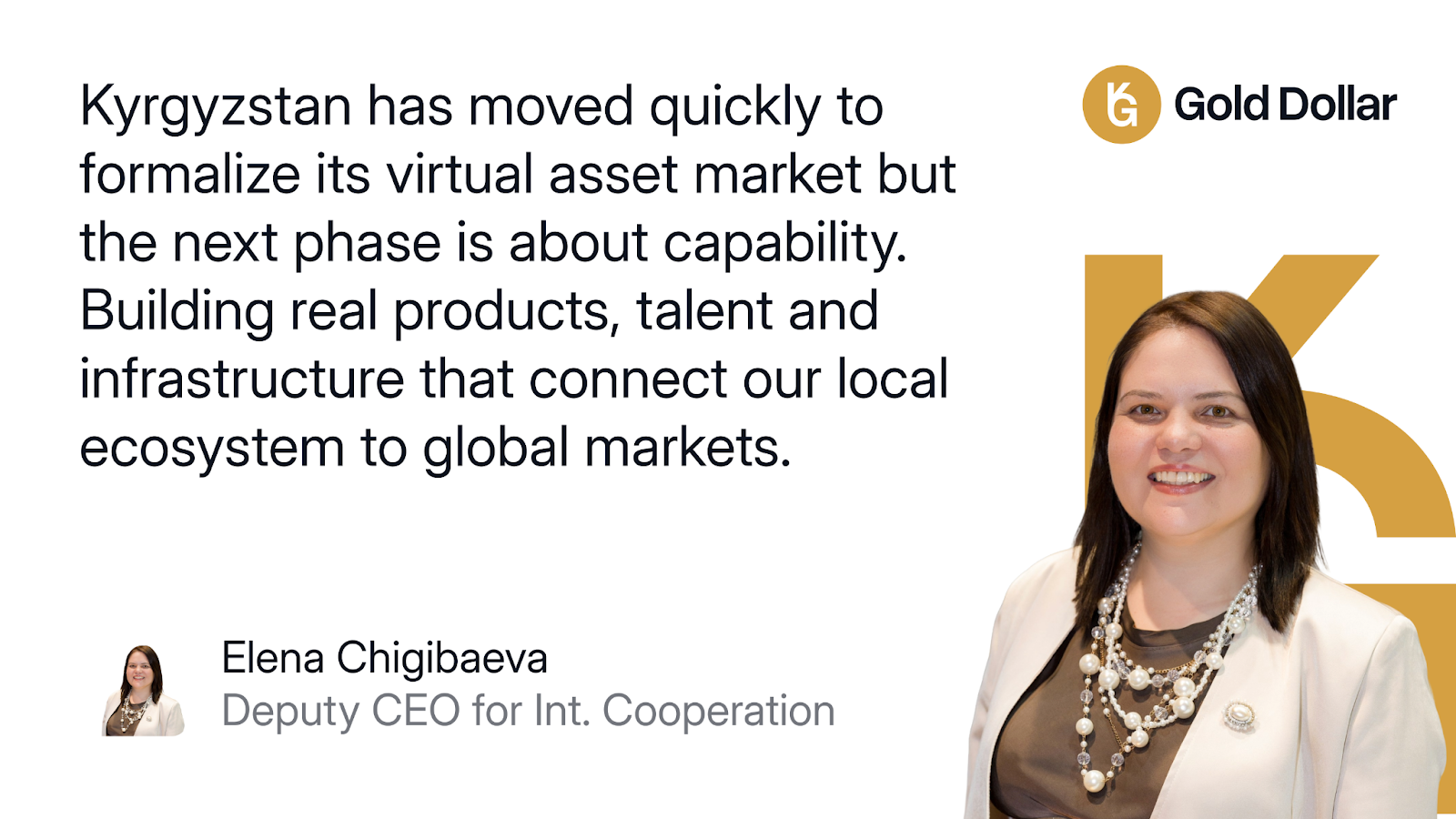
As Elena Chigibaeva, Deputy CEO for International Cooperation at USDKG, notes:
"Kyrgyzstan has moved quickly to formalize its virtual asset market but the next phase is about capability. Building real products, talent and infrastructure that connect our local ecosystem to global markets."
This perspective reflects a broader shift from regulatory groundwork toward practical implementation, where payment infrastructure must integrate with real economic activity.
Programmable Money and Blockchain Payment Infrastructure
Blockchain technology introduces programmability into payment systems through advanced settlement capabilities and smart contracts.
Programmable payments allow transactions to be executed automatically based on predefined conditions. This enables new use cases such as automated settlement, real-time payments, real-time reconciliation, payment finality, and integration with digital trade infrastructure that streamlines payment flows.
These capabilities are particularly relevant for businesses managing complex cross-border operations, where timing and coordination of payments play a critical role.
As blockchain adoption continues, programmable financial infrastructure is becoming an integral part of modern payment systems.
Designing a Modern Cross-Border Payments Strategy
Cross-border payment strategies are evolving toward a multi-layered approach.
Organizations increasingly combine traditional banking systems, fintech platforms, and blockchain-based payment solutions depending on their operational needs. This allows them to balance speed, transparency, regulatory compliance, aml compliance requirements, and value stability.
The choice of payment infrastructure is becoming a strategic decision rather than a purely operational one. Businesses evaluate factors such as settlement speed, liquidity access, working capital efficiency, regulatory compliance requirements, foreign exchange exposure, and exposure to currency risk when selecting cross-border payment solutions.
Conclusion
Cross border payments are transitioning into a more flexible and technology-driven ecosystem.
Businesses now have access to a range of solutions that enable faster international money transfers, improved transparency, and more stable value transfer across borders. This includes traditional financial infrastructure as well as emerging digital assets such as stablecoins and asset-backed tokens that facilitate global value movement.
As global commerce continues to expand, the ability to design efficient cross-border payment strategies will play an increasingly important role in maintaining competitiveness.
Solutions such as USDKG demonstrate how stablecoins can integrate into this evolving landscape by combining blockchain-based settlement with asset-backed stability, supporting more reliable global transfers.
It should be stated that the token, like other stablecoins, may be used by users for international trade and payments. Such payments must comply with the regulations of the relevant jurisdictions.
Related Articles
August 11, 2026
Stablecoins Are Reshaping Financial Infrastructure
Financial infrastructure rarely changes through a single technological breakthrough. It evolves through the gradual adoption of systems that improve the movement, settlement, and management of capital while integrating into existing financial processes.

July 14, 2026
The Stablecoin Market Is Entering Its Regulatory Era
Stablecoins are entering a new phase of development where regulatory clarity is becoming as important as liquidity and network effects. Around the world, jurisdictions are reshaping digital finance, making governance, transparency, and legal certainty increasingly central to long-term adoption.

June 23, 2026
The Rise of Commodity-Backed Digital Assets in Global Finance
Commodity-backed digital assets are bringing tangible value into blockchain-based financial systems. As institutions place greater emphasis on collateral quality, transparency, and reserve integrity, assets such as gold, energy resources, and other commodities are becoming increasingly relevant within digital finance.